



Who makes bag-in-box packaging?
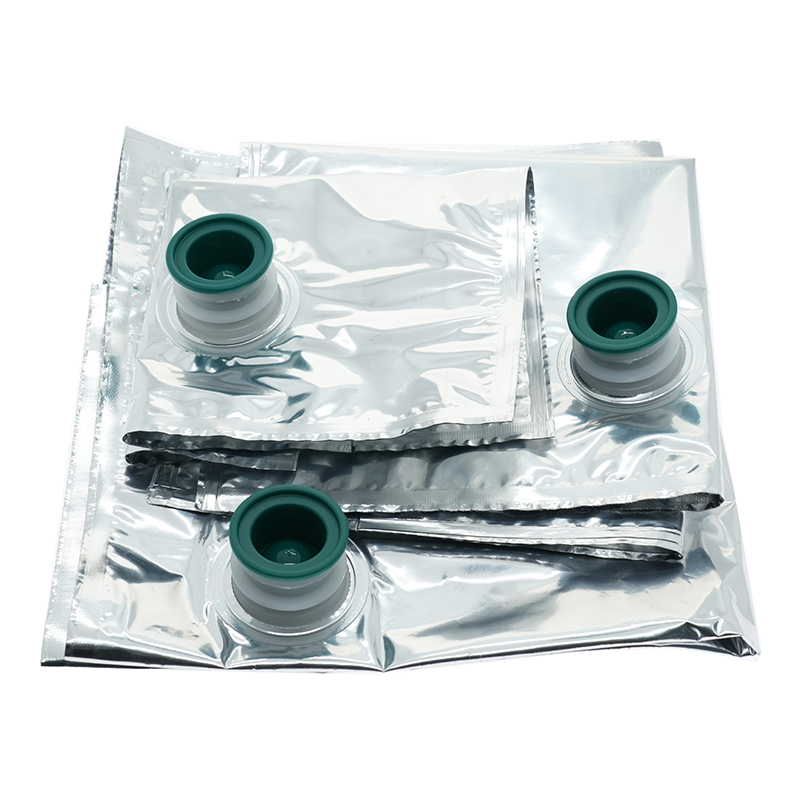
When you search for bag in box manufacturers, the top names include Scholle IPN, Liquibox, Smurfit Westrock, and Meiji Packaging. Bag-in-box packaging is a flexible bag housed inside a cardboard box, designed to store and dispense liquids efficiently. Demand is rising across wine, juice, dairy, and industrial liquid sectors. The global bag-in-box container market reached USD 4.20 billion in 2024 and is projected to grow to USD 5.93 billion by 2030, reflecting a CAGR of 5.9% from 2025 to 2030. Choosing a skilled bag in box manufacturer ensures quality, customization, and reliability. These bag in box manufacturers prioritize high-barrier films and leak-proof spouts to protect your product. Partnering with an experienced supplier helps extend shelf life and reduce packaging waste, giving you confidence in your supply chain.
Key Takeaways
Top bag-in-box makers include Mondi, WestRock, and Liquibox, but local companies can be more flexible.
Bag-in-box packaging uses multiple layers of film to protect liquids, with choices such as aluminum foil for a longer shelf life.
Pick a maker that produces its own goods, offers custom choices, and holds certifications such as BRCGS and ISO 9001.
This packaging is used in many industries, from wine and juice to chemicals. It saves money and cuts down on waste.
Meiji Packaging is special for its vertical integration, custom barrier films, and strict quality testing.
Leading Bag-in-Box Manufacturers
Global Industry Leaders
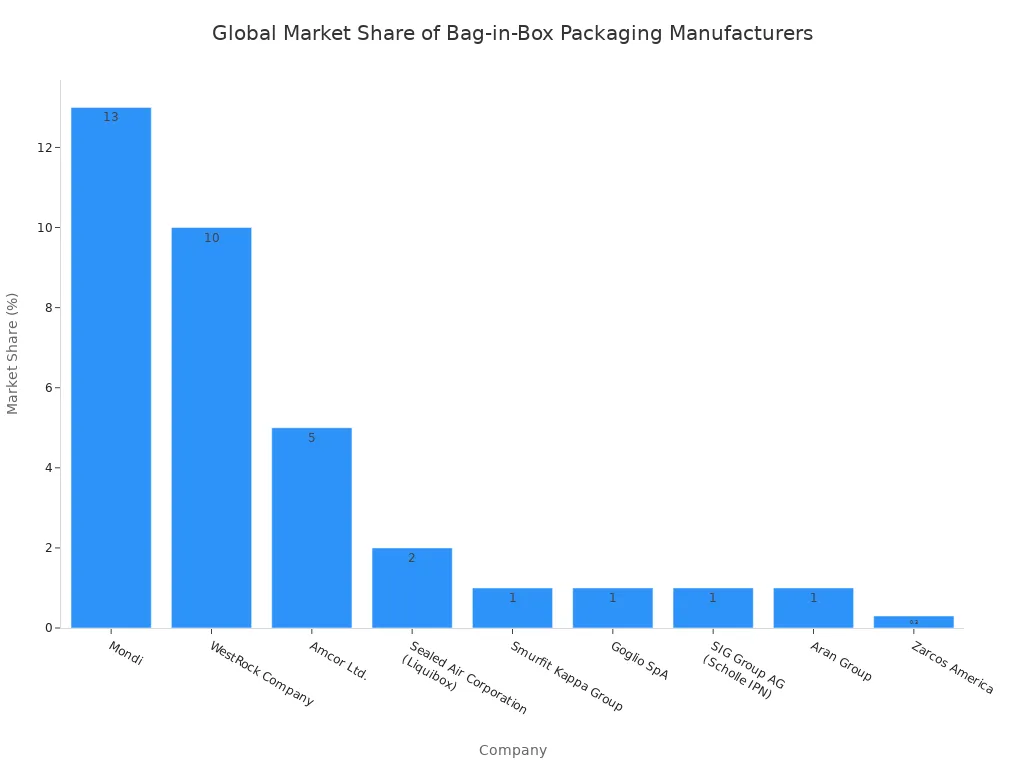
The bag-in-box packaging market has several big companies that shape the industry. Mondi is the top with 13% of the market. WestRock Company comes next with 10%. Amcor Ltd. holds 5%. Sealed Air Corporation (Liquibox) has 2%. Smurfit Kappa Group, Goglio SpA, SIG Group AG (Scholle IPN), and Aran Group each have 1%. Zarcos America rounds out the top ten with 0.3%. Together, these top ten companies make up 34.3% of all market money.
Company | Market Share (%) |
|---|---|
Mondi | 13 |
WestRock Company | 10 |
Amcor Ltd. | 5 |
Sealed Air Corporation (Liquibox) | 2 |
Smurfit Kappa Group | 1 |
Goglio SpA | 1 |
SIG Group AG (Scholle IPN) | 1 |
Aran Group | 1 |
Zarcos America | 0.3 |
These top bag in box makers offer solutions from standard bags to custom high-barrier films. You will see that each company has its own strengths. Liquibox focuses on drinks, liquid foods, and chemicals. Smurfit Westrock gives you integrated systems that mix bag making with box making. Scholle IPN focuses on wine and juice, using many years of aseptic experience.
When you compare Scholle IPN and Liquibox, you see two big companies that serve the largest drink companies worldwide. Both give very good product quality. But mid-market buyers often face longer wait times, less technical help, and slower answers from these industry giants. They do not want to customize much for smaller accounts.
New ideas drive these global leaders. Amcor and DS Smith focus on recyclable materials and custom bag-in-box solutions. They improve logistics and create new ways to dispense products. Smart solutions make products last longer and cut waste across the supply chain. DS Smith works on sustainability and better barrier technologies, and it recently announced new eco-friendly packaging lines.
Regional and Niche Players
Beyond the global giants, you will find special makers that serve regional markets and specific needs. AstraPouch makes 3-20L bags for many liquid products. Great Northern Packaging focuses only on bag-in-box solutions for wine. Meiji Packaging stands out for custom solutions with production steps all in one place.
In the Asia-Pacific region, you will find big players including Liquibox, Smurfit Kappa, SIG, Hangzhou Hansin New Packing Material Co., Ltd., Logos Pack, CICH packaging, CDF Corporation, Natron Equipment & Spares Pvt. Ltd, Koldpackindia, WestRock Company, and DS Smith. Other regional makers include Optopack, Parish Manufacturing, and ARAN GROUP.
These regional bag in box makers often give more flexible service and faster answers. They can handle custom sizes, fitments, and barrier levels that bigger companies may ignore. For your specific product needs, these niche players give you good options instead of the global leaders.
When you look at bag in box makers, think about both global reach and regional know-how. The right choice depends on your product type, how much you need, and how much you want to customize. Each maker has its own skills that may fit your packaging needs well.
How Bag-in-Box Packaging Is Made
Material Selection and Barrier Films
The bag inside your box is not just one sheet of plastic. It is made of many layers of film. Each layer is designed for a specific need. The most common type (36% of packages) uses PET as the outer layer and LDPE as the inner layer. This mix gives strength, moisture protection, and good heat sealing. Another common choice is PA (nylon) with LDPE. It is great for food that can spoil from oxygen. PP with PP is used in 14% of packages. It resists grease and moisture well.
Barrier materials give important protection. Aluminum is used in 19% of packaging. It stops air, light, and moisture completely. EVOH, PVDC, and SiOx/Al2O3 coatings also block oxygen and smells. Tie layers are made from polyurethane or acid-grafted polyolefins. They join layers that cannot bond on their own. Structural layers like PE, PET, HDPE, and PA make the bag strong and resistant to punctures.
Film Type | Key Properties | Best For |
|---|---|---|
Standard (Nylon/PE) | Strong against punctures, bends easily | Regular liquids, oils |
Metalized (VMPET) | Blocks light and oxygen | Wine, juice, syrups |
Aluminum Foil (AL) | Best barrier, lasts 12+ months | Aseptic products, long-term storage |
EVOH Transparent | High oxygen block with see-through | Products needing inspection |
Production, Fitments, and Quality Control
The making process follows a clear order. First, the inner bag is made by sealing two film layers together. Next, a spout is attached to the bag. This makes sure the connection is leakproof. Then, the liquid fills the bag. Finally, the filled bag goes into the outer cardboard box. The dispensing valve is then placed.
Film lamination bonds many layers using glues without solvents.
Bag forming shapes the flexible container with exact seal sizes.
Fitment installation attaches the tap or valve system.
Quality testing checks burst strength, seal integrity, and leak resistance.
Fitments are very important for how the liquid comes out. Vitop® leads the market. It has sold over 5 billion taps. Its leak rate is only 1 in 85 million. The Vitop® Original has a valve that closes by itself and does not drip. It also has a tear strip to show if the package was opened. The Compact version lets in less air to make the product last longer. For factory use, butterfly valves and gland connectors work with fast filling lines.
Quality control uses standard tests. The Vacuum Leak Test (ASTM F2338) finds leaks by checking pressure changes in a vacuum chamber. The Bubble Emission Test (ASTM F2096) puts the package in water and adds pressure. Bubbles show where leaks are. Burst Strength Testing (TAPPI/ANSI T 810 om-11) uses a Mullen tester. It adds hydraulic pressure until the sample breaks. These tests make sure your packaging works well from the factory to the user.
Choosing a Reliable Bag-in-Box Packaging Manufacturer
Key Criteria for Supplier Selection
You need a partner who controls the entire production process. In-house manufacturing means the supplier manages film extrusion, bag forming, and fitment installation under one roof. This vertical integration prevents quality gaps between separate vendors. You get consistent seal strength and reliable leak-proof performance when one team oversees every step.
Customization flexibility matters just as much. Your product has unique requirements for size, barrier level, and dispensing method. A capable supplier offers volumes from 2L to 220L aseptic bags. You can choose fitments like Vitop® taps, butterfly valves, screw caps, or custom connectors. Barrier options range from standard Nylon/PE to high-barrier aluminum foil structures. The right manufacturer tailors each layer to your product's sensitivity to oxygen and light.
Certifications protect your brand and your customers. Look for BRCGS and ISO 9001 certification. These standards verify consistent quality management systems. FDA and EU food-contact compliance ensures your packaging meets safety regulations for consumable products. Sustainability options also matter. Recyclable mono-PE structures reduce environmental impact while maintaining performance.
Production capacity determines whether the supplier can meet your volume demands. Ask about their manufacturing output and lead times. A reliable partner scales production alongside your business growth. Quality assurance systems should include burst strength testing, leak detection, and seal integrity checks. You want documented test results for every batch.
Why Meiji Packaging Stands Out
Meiji Packaging demonstrates these qualities through its vertically integrated operations. The company controls critical PE film manufacturing internally. This control ensures excellent seal strength, puncture resistance, and leak-proof performance across every bag. You receive consistent quality because Meiji manages the entire chain from raw materials to finished product.
The barrier film options address specific product needs:
Wine and juice: VMPET/NY/PE or AL/NY/PE structures block light and oxygen completely, preserving aroma and flavor.
Dairy and oil: PA/PE or EVOH/PE combinations offer flex-crack resistance and cold tolerance for refrigerated transport.
Industrial liquids: Heavy-duty PE/PA/PE structures deliver high burst strength for demanding applications.
Meiji tests every bag's fitment seal with 100% pressure testing. A 24-hour static pressure test simulates long-term stacking conditions. This verification ensures zero leakage during storage and transit. The 220L aseptic bag uses an AL/NY/PE structure with oxygen transmission rate below 0.5 cc/m²/24h. This barrier level supports extended shelf life for sensitive products like fruit purees.
The fitment technology handles demanding conditions. The 1-inch standard gland works with major filling machine brands including SIG and Scholle. You can select butterfly valves, Vitop® taps, or custom connectors based on your filling line. The fitment tolerates hot-fill temperatures of 85-90°C, making it suitable for pasteurized products. Burst strength exceeds 40 psi, surpassing standard shipping requirements.
Meiji's film engineering includes precise Coefficient of Friction control between 0.2-0.4. This range ensures flawless machinability on high-speed vertical and horizontal form-fill-seal lines. Superior hot tack strength prevents seal failure during filling. Customized sealing layers address specific needs like anti-pollution properties for powders or easy-peel options for convenience.
Applications span food and beverage, dairy, daily chemicals, and aseptic bulk packaging. Whether you need 2L wine bags or 220L industrial liners, Meiji delivers tailored solutions. The BRCGS and ISO 9001 certified facility ensures compliance with FDA and EU standards. TUV-certified compostable or recyclable mono-PE options support your sustainability goals. When you evaluate bag in box manufacturers, Meiji's combination of in-house production, advanced barrier technology, and rigorous testing makes it a strong choice for reliable packaging.
Industries Using Bag-in-Box Packaging
Food and Beverage Applications
Bag-in-box packaging shows up in many foods and drinks. Wine is the biggest user. Special films like VMPET/NY/PE or AL/NY/PE keep the smell and taste while blocking UV light. Juice makers use it a lot too. The tight seal keeps oxygen out, so products last longer and less gets thrown away. For syrups and concentrates, the bag collapses as it empties. You can use almost every drop without letting air in.
Dairy items do well with PA/PE or EVOH/PE layers that handle cold. Milk, cream, and ice cream mix stay fresh when shipped cold. Edible oils benefit from strong Nylon/PE films. These resist punctures and handle the weight and movement of liquid fats without leaks.
The savings compared to hard containers are obvious. Light bags and small boxes cut shipping costs and storage space. Bulk packs in 5L, 10L, or 20L sizes lower the price per unit and make handling easier. Fewer materials mean less room needed for transport and better stacking. The collapsible design also cuts waste, making the whole supply chain work better. You save money at every step, from shipping to storage to pouring.
Industrial and Chemical Applications
The industrial liquid market grows about 4-6% each year. Chemicals, lubricants, farming, and cars push this growth. Companies choose this packaging for safe storage, meeting rules, and cutting waste and contamination.
Container Size | Industrial Applications | Key Growth Driver |
|---|---|---|
10-15 liters | Chemicals, lubricants, cleaning solutions | Schools and businesses buying bulk sanitizers |
15-20 liters | Solvents, adhesives, oils | Easy storage and transport |
More than 20 liters | Farm chemicals, building materials | Heavy-duty bulk needs |
For detergents and home chemicals, bags usually hold 3-20L. This size fits commercial cleaning work. Bigger sizes, from 15 to 20 liters, work for industrial chemicals. Above 20 liters, you get bulk shipping of chemicals and cleaning products. The 220L aseptic liner handles fruit purees and other delicate liquids that need the strongest protection.
Bag-in-box packaging works for both store products and heavy industry. The same basic design adapts to different sizes, barrier levels, and taps. Whether you pack wine for store shelves or farm chemicals for fields, this format gives reliable, cost-effective liquid storage.
The right bag in box manufacturers depend on your product type and volume needs. Global leaders like Scholle IPN and Liquibox serve large beverage companies. Regional players offer flexibility for smaller accounts. Meiji Packaging combines both strengths with in-house production and custom barrier films.
Working with Meiji gives you complete control over quality. You receive tailored sizes from 2L to 220L, leak-proof fitments, and certified safety standards. Their industry expertise spans wine, dairy, and industrial liquids.
Contact Meiji or other listed manufacturers for packaging that fits your exact requirements. Request samples, compare options, and choose a partner who protects your product from factory to consumer.
FAQ
How long does bag-in-box packaging keep products fresh?
How long your product stays fresh depends on the barrier film you pick. Standard Nylon/PE layers keep normal liquids safe for a few months. Aluminum foil layers can keep wine and aseptic products fresh for more than 12 months. EVOH clear films block oxygen well while still letting you see what is inside. The right barrier level depends on how sensitive your product is.
Can I customize the bag size and tap type?
Yes, you can. Manufacturers make bags from 2L to 220L for aseptic products. You can choose Vitop® taps for home use, butterfly valves for factory filling, or screw caps for easy pouring. Custom connectors work with the filling machines you already have. The box size and printing can also match your brand needs.
What certifications should a reliable manufacturer hold?
Look for BRCGS and ISO 9001 certification. These prove the company has steady quality control systems. FDA and EU food-contact rules make sure packaging is safe for food products. TUV-certified compostable or recyclable mono-PE choices help meet green goals. Ask suppliers for their certification papers before you agree to work with them.
How do I test bag quality before placing a large order?
Ask for samples and run standard tests. Check burst strength with a Mullen tester, which should be above 40 psi. Do a 24-hour static pressure test to make sure there are no leaks. Measure oxygen transmission rate for high-barrier films, aiming for below 0.5 cc/m²/24h for aluminum layers. These tests show the packaging can handle your shipping and storage needs.
Are bag-in-box packages recyclable?
Many makers now offer eco-friendly choices. Recyclable mono-PE structures keep barrier performance while cutting environmental harm. Compostable films give another green option. Ask your supplier about their sustainability programs. Request papers that prove recyclability claims and follow local rules.
Please Contact Us!
Recent News
1.What is bag in box packaging
2026-03-192.Bag-in-Box Makes Bulk Packaging Cheaper and Easier
2026-04-083.Complete Guide to Bag-in-Box (BIB) Packaging Applications Across Industries
2026-04-234.What Does“Bag in Box”Mean?
2026-05-085.Top 10 Bag-in-Box Manufacturers 2026
2026-08-036.Bag in Box Liquid Packaging vs Bottles: Which Packaging Solution Is Better?
2026-07-16

