



What Does“Bag in Box”Mean?
Introduction
If you’re involved in food and beverage, dairy, daily chemicals, or industrial liquid handling, you’ve likely heard the term bag-in-box packaging—but you may still ask: What does “bag in box” mean, and why has it become one of the most popular liquid packaging solutions worldwide?
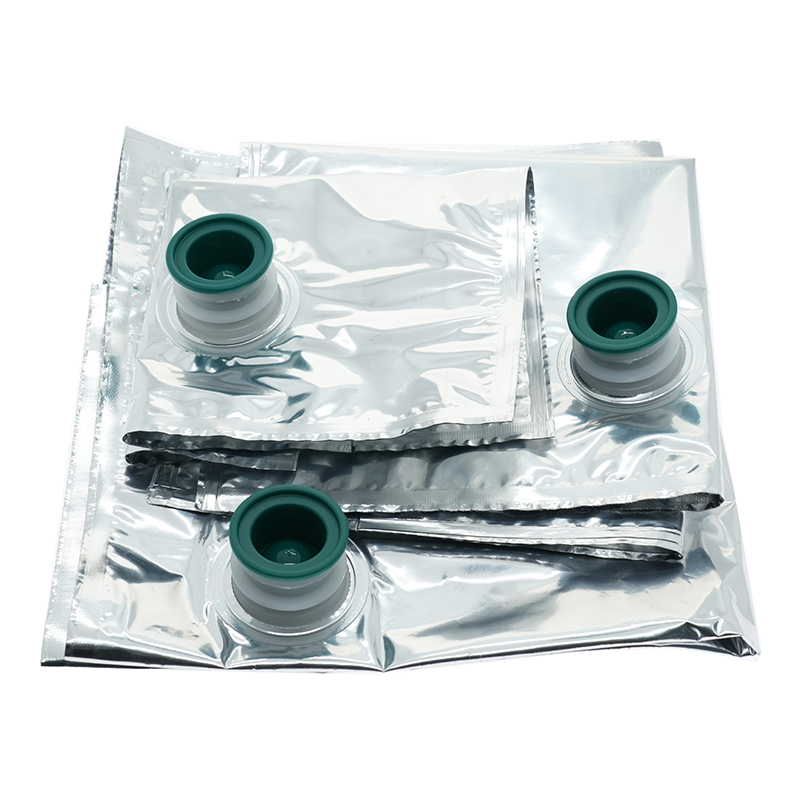
In simple terms, bag-in-box packaging (often shortened to BIB) is a complete, efficient liquid packaging system that combines a flexible, multi-layer inner bag, a secure dispensing fitment, and a protective outer corrugated box. It is designed to store, transport, and dispense liquids safely, hygienically, and cost‑effectively. Unlike rigid bottles, pails, or drums, bag-in-box packaging collapses as product is dispensed, keeping air out and preserving freshness far longer.
At Meiji Packaging, we are a professional manufacturer specializing in high‑performance bag-in-box packaging for global clients. In this detailed guide, we fully explain what bag-in-box packaging is, how it works, its core components, materials, applications, advantages, and how to choose the right BIB solution for your business. This article uses plain language, avoids complex jargon, and provides practical, actionable information to help you make informed packaging decisions.
Whether you are a brand owner, production manager, procurement specialist, or packaging engineer, this guide will answer every question you have about bag-in-box packaging.
1. What Does “Bag in Box” Mean? Official Definition
Bag-in-box packaging is a modular liquid packaging system consisting of three core parts:
A flexible, multi-layer plastic inner bag that holds the liquid
A sealed fitment (tap, valve, or connector) for filling and dispensing
A sturdy outer carton that provides structural support and protection
Together, they form a safe, efficient, and user‑friendly solution for nearly any liquid product.
Originally developed in the 1950s for secure transport of industrial liquids, bag-in-box packaging has evolved into a mainstream choice for wine, juice, dairy, edible oil, syrup, detergent, industrial oils, and even aseptic bulk products such as fruit puree and tomato paste.
Today, bag-in-box packaging is recognized globally for its superior shelf life, leak resistance, light weight, cost efficiency, and sustainability. It is widely used in retail, food service, industrial manufacturing, and logistics.
2. Core Components of Bag-in-Box Packaging
To fully understand what does bag in box mean, you must know its three essential components.
2.1 The Inner Bag
The inner bag is the most critical part of bag-in-box packaging. It is made from co-extruded or laminated multi-layer films that provide barrier protection, strength, and sealability.
Meiji Packaging uses customized in‑house PE films to ensure strong sealing, puncture resistance, and flex‑crack durability—preventing pinhole leaks during transit and handling.
Common film structures:
Nylon/PE: Standard barrier, strong puncture resistance for dairy, detergent, and water
Metalized (VMPET): High oxygen and light barrier, ideal for wine, juice, and edible oil
Aluminum Foil (AL): Maximum barrier, supports 12+ months shelf life for sensitive liquids
EVOH Transparent: High oxygen barrier with visibility, suitable for food‑grade oils, syrups, and water
2.2 The Fitment / Dispensing System
The fitment is the sealed opening used for filling and dispensing. It ensures no leakage, no air intake, and clean, controlled pouring.
Common types in bag-in-box packaging:
Front‑push tap: Household use, drip‑free, easy for wine, water, and juice
Butterfly valve: Stable flow for food service and industrial lines
Screw cap: Simple sealing for storage or transport
Industrial gland connector: Compatible with high‑speed filling lines
All fitments are heat‑sealed to the bag with zero leakage.
2.3 The Outer Box
The outer box is usually corrugated cardboard, providing physical protection, stacking stability, and branding space. For large volumes (10L–20L), reinforced handles are added for safe handling.
Together, these three parts make bag-in-box packaging a complete, high‑performance system.
3. How Does Bag-in-Box Packaging Work?
The working principle of bag-in-box packaging is simple but highly effective.
1. Filling
The inner bag is filled with liquid through the fitment. Most BIB uses aseptic or clean filling conditions to ensure hygiene.
2. Sealing
After filling, the fitment is closed tightly, creating an airtight environment inside the bag.
3. Transport & Storage
The bag is placed inside the outer box. The box protects against impact, moisture, and light.
4. Dispensing
When the user opens the tap, liquid flows out—and the bag collapses inward without allowing air to enter. This prevents oxidation, bacteria growth, and flavor loss.
This unique collapsing design is the biggest reason bag-in-box packaging keeps products fresh for 30–60 days after opening, far longer than bottles or jars.
4. Key Advantages of Bag-in-Box Packaging
Why has bag-in-box packaging become so widely used? Below are its most important benefits.
4.1 Excellent Freshness & Long Shelf Life
Multi-layer barrier films block oxygen, light, and moisture. Combined with air‑free dispensing, bag-in-box packaging greatly extends product life—critical for wine, juice, dairy, and edible oil.
4.2 Leak-Proof & High Safety
Meiji bag-in-box packaging undergoes 100% pressure testing and drop testing. The sealed fitment and strong film structure eliminate leaks during long‑distance transport.
4.3 Lightweight & Low Logistics Cost
Bag-in-box packaging is much lighter than glass or rigid plastic containers. This reduces shipping weight, lowers fuel consumption, and allows more units per pallet.
4.4 Easy to Use & Dispense
The tap design allows one‑handed, drip‑free operation without funnels or tools.
4.5 Strong Sustainability
Outer boxes are recyclable. BIB uses less plastic than rigid containers. Meiji also offers recyclable mono‑PE and compostable options to support ESG goals.
4.6 Wide Customization
Meiji provides custom sizes (2L–220L aseptic drums), print designs, barrier levels, and fitment types to match any industry need.
5. Common Applications of Bag-in-Box Packaging
Bag-in-box packaging is extremely versatile and used across countless industries.
5.1 Food & Beverage
Wine, fruit juice, syrup, edible oil, liquid egg. High barrier protects flavor and aroma.
5.2 Dairy Products
Milk, cream, soft-serve mix. Flexible, hygienic, and shatter‑proof.
5.3 Daily Chemical & Industrial
Laundry detergent, dish soap, engine oil, liquid fertilizer. Strong film resists chemicals and punctures.
5.4 Aseptic Bulk Packaging
220L aseptic liners for fruit puree, tomato paste, and dairy concentrates. Used for long‑distance bulk transport.
No matter what liquid you handle, bag-in-box packaging can provide a safe, efficient solution.
6. Materials & Structures Used in Meiji Bag-in-Box Packaging
At Meiji Packaging, we offer professional material options for different needs.
6.1 Standard Barrier (Nylon/PE)
Good puncture resistance. For dairy, detergent, water, non‑sensitive liquids.
6.2 Metalized Film (VMPET/NY/PE)
High oxygen & light barrier. Perfect for wine, juice, and edible oil.
6.3 Aluminum Foil (AL/NY/PE)
Maximum barrier performance. For products requiring 12+ months shelf life.
6.4 EVOH Transparent Film
High oxygen barrier + transparency. For food‑grade oil, spring water, syrups.
All materials are food‑safe, BRCGS and ISO 9001 certified, and comply with FDA and EU standards.
7. Bag-in-Box Packaging vs. Traditional Packaging
Many customers ask: Is bag-in-box packaging better than bottles, cans, or pails?
| Feature | Bag-in-Box Packaging | Traditional Bottles/Drums |
|---|---|---|
| Freshness After Opening | 30–60 days | 3–7 days |
| Leak Risk | Extremely low | High for glass/plastic |
| Weight | Light | Heavy |
| Logistics Cost | Low | High |
| Storage Space | High stacking efficiency | Bulky |
| Sustainability | High recyclability | High plastic/glass waste |
For most liquid applications, bag-in-box packaging provides better performance at a lower total cost.
8. How to Choose the Right Bag-in-Box Packaging
Follow these practical steps to select the best BIB for your product.
8.1 Determine Product Type
Wine/juice → choose metalized or aluminum foil barrier. Dairy/oil → choose EVOH or Nylon/PE. Industrial liquids → choose heavy‑duty PE/PA/PE.
8.2 Select Volume
Meiji offers: 2L, 3L, 5L, 10L, 20L, and 220L aseptic drums.
8.3 Choose Fitment Type
Retail → front‑push tap. Industrial → gland connector. Storage → screw cap.
8.4 Confirm Barrier Needs
Short shelf life → standard barrier. Long shelf life → high barrier (AL/EVOH).
8.5 Customization
Print design, handle, box structure, and certification can all be customized.
9. Why Choose Meiji Packaging for Your Bag-in-Box Packaging?
As a leading manufacturer, Meiji Packaging provides reliable, high‑quality bag-in-box packaging with strong advantages.
9.1 Vertical Integration & Stable Quality
We produce our own PE film, ensuring stable quality, strong seals, and cost efficiency.
9.2 Strict Leakage Control
100% pressure testing, 24‑hour static pressure testing, and drop testing ensure zero leaks.
9.3 Full Certifications
BRCGS, ISO 9001, FDA, EU food‑contact compliance.
9.4 Flexible Customization
Sizes, volumes, barriers, fitments, printing, and handles are fully customizable. Low MOQ for standard items.
9.5 Professional Technical Support
Our team provides packaging consultation, filling line compatibility, and after‑sales service.
10. Conclusion: What Does “Bag in Box” Mean?
To sum up: Bag-in-box packaging is a complete, efficient, reliable liquid packaging system consisting of a flexible inner bag, dispensing fitment, and protective outer box. It offers superior freshness, safety, convenience, and sustainability compared to traditional packaging.
Now you understand what does bag in box mean—and why it is the first choice for liquid packaging across food, beverage, dairy, industrial, and chemical industries.
If you are looking for a professional, stable, and cost‑effective bag-in-box packaging supplier, Meiji Packaging is your ideal partner.

