



The key differences between flat bottom pouches and stand-up pouches
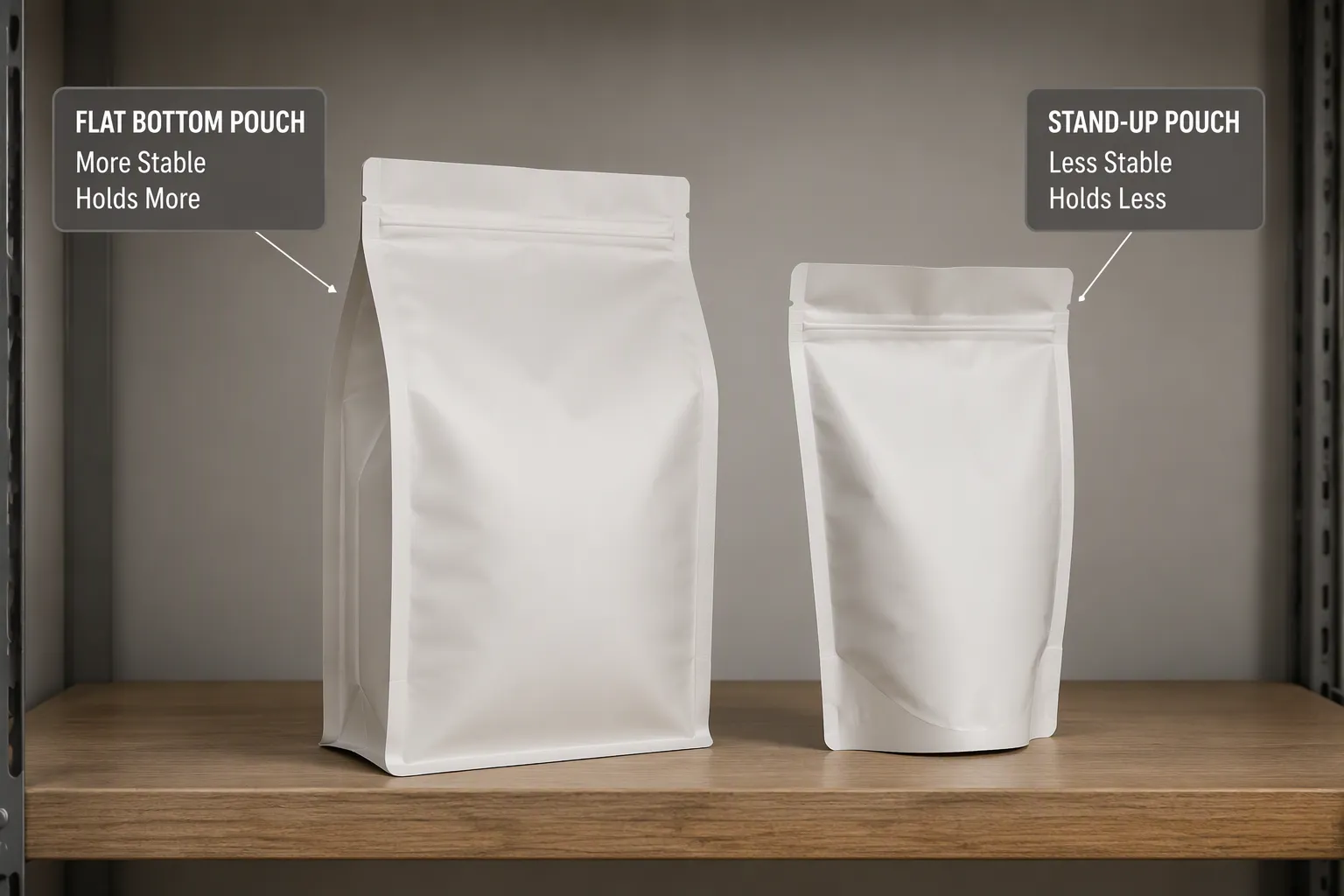
Flat bottom pouches and stand-up pouches differ most clearly in base shape, stability, and shelf presence. A flat bottom pouch rests on a broad, rectangular base. A stand-up pouch balances on a rounded gusset. Both formats stand upright on the shelf, yet each one serves distinct product and branding needs. Brand owners often weigh a stand-up pouch against a box-style design for very different reasons. The stand-up pouches market keeps expanding, and buyers now compare structures with real care. This comparison examines how each format performs in practical use. Readers can then judge which option fits their products and their goals.
Key Takeaways
Flat bottom pouches have a flat base for better stability and heavier loads.
Stand-up pouches use a rounded gusset and cost less for lighter products.
Flat bottom pouches offer five printable panels for more branding space.
Stand-up pouches work well for single-serve items and tight budgets.
Test both formats with your actual product before you decide.
Flat Bottom Pouches vs. Stand-Up Pouches: The Basics
What Is a Flat Bottom Pouch?
A flat bottom pouch is a flexible bag built around a broad, flat base panel. The structure is also called a box bottom pouch, a box pouch, or an 8-side seal pouch. It has defined front, back, and side panels, so it holds a rectangular footprint on the shelf. Two base styles exist. The doyen bottom suits lighter fills. The plow bottom handles heavier fills. Both styles let the bag stand upright on its own base without support.
Meiji Packaging's Flat Bottom Bags (Box Pouches) show how this format works in practice. The design pairs the rigidity of a box with the flexibility of a pouch. Brand owners choose it when they want a stable, box-like presence on the shelf.
What Is a Stand-Up Pouch?
A stand-up pouch is flexible packaging with a round or oval bottom gusset. The gusset unfolds when the bag fills, and the pouch then stands upright on its own. This separates it from flat pouches and pillow pouches, which lie flat and need a rack or bin. The table below sums up the structural contrast.
Pouch Type | Base Shape | How It Stands |
|---|---|---|
Flat bottom pouch | Flat base | The flat base gives excellent stability and lets it stand upright on its own |
Stand-up pouch | Gusseted bottom | Relies on the gusseted bottom to stand upright |
Both formats keep their shape well after filling. The right choice depends on product requirements. A stand up pouch works well for lighter goods and tight shelf space. A flat-bottom pouch shines when load weight and a box-like look matter most. Buyers who compare flat bottom pouches, stand-up pouches side by side often find that this basic structural difference drives every later decision.
Shape, Stability, and Shelf Presence
Base Structure and Load-Bearing
The base structure is the biggest design difference between these two formats. A flat bottom pouch has a set bottom panel with side gussets. This five-panel design makes four corner seals and spreads the total weight evenly over the whole flat base. A stand-up pouch depends on a single bottom gusset. Downward force gathers on a narrower bottom seam, and outward push against flexible walls adds tension to that seam.
A stand-up pouch uses one bottom gusset, while a flat bottom pouch uses a set bottom panel with side gussets — that is why a flat bottom pouch often stands more firmly after filling.
Attribute
Flat Bottom Pouch
Stand-Up Pouch
Base structure
Rigid box shape with a set bottom panel and side gussets (5-panel design, four corner seals)
Single bottom gusset/seam
Weight distribution
Spreads total weight evenly over the whole flat base / five panels
Gathers downward force onto a narrower bottom seam
Stress on seams
A balanced base lowers stress on bottom welds in one spot
Outward push against flexible walls raises seam tension and wear
Behavior under heavy loads
Holds heavier amounts without stretching or sagging; keeps its shape
Often shifts under extreme loads; may sag or wear during transit
Stability
Stands more firmly after filling; better load stability and burst resistance (e.g., products over 2 lbs)
Less firm; depends on product weight to stand
Heavy fills show the difference fast. Meiji Packaging builds its Flat Bottom Bags with a special co-extruded PE sealant layer. This layer stops bottom seal failure or leaks for heavy loads up to 10kg+. The flat base panel carries that mass across five panels instead of one seam. Pouch seal integrity therefore stays steady through filling, transit, and repeated handling.
Shelf Stability Compared
A flat-bottom pouch gives a steady footprint on the retail shelf. Its rectangular footprint keeps the bag upright and square to the shelf edge. The box pouch resists leaning even when nearby bags press against it. A stand up pouch stands on its gusset, and its self-stability depends on fill level and product weight. Both formats look clean on the shelf when specifiers match the structure to the load.
Failure modes on the shelf usually come from design choices, not the format itself. Common problems include:
A failed seal, poor barrier, or weak shelf look can cost more than the savings from a cheap pouch.
Choosing a pouch based only on looks can fail if the barrier is wrong for the product.
Using a standard size without testing actual fill volume can leave the pouch underfilled, overstuffed, unstable, or hard to seal.
Placing key design elements too close to the gusset, zipper, tear notch, or seal area makes the final pouch look less polished than the mockup.
Underestimating durability: a pouch that looks fine on a shelf may need extra puncture resistance or carton protection for shipping.
Two operational fixes solve most stability complaints. First, uneven shape — pouches may lean or collapse; fix this by gently tapping the bag after filling, letting the product settle, and avoiding overfilling. Second, seal failures — if product touches the heat-seal area the seal may not hold; the area above the upper seal must be kept fully clean before sealing. Fine powders and oily products need extra attention here. A completely flat base helps a flat bottom pouch recover from minor settling. A stand up pouch has less margin, so fill control matters more. Buyers comparing flat bottom pouches,stand-up pouches should test both formats with real product before committing.
Branding Space and Printability
Printable Panels and 360-Degree Branding
A flat bottom pouch gives brands more space to share their story. This format has five printable surfaces: front, back, two side gussets, and the flat bottom. A stand-up pouch usually offers three printable panels: front, back, and the gusseted bottom. That extra surface area lets flat bottom pouches hold bigger graphics, more product details, and stronger marketing messages.
Pouch Type | Printable Panels |
|---|---|
Stand-up pouch | Three panels: front, back, and bottom gusset |
Flat bottom pouch | Five panels: front, back, two sides, and flat bottom |
A flat bottom pouch stands up on its own and gives 360-degree brand visibility, so the pouch acts like a silent salesperson at the point of sale.
Meiji Packaging backs this branding power with flexible material choices. Brand owners can pick PET/AL/PE foil, recyclable mono-PE, or kraft paper laminates. Digital printing starts at a low MOQ of 1,000 pieces for limited editions. Rotogravure printing handles mass production at a MOQ of 10,000 pieces and keeps brand colors steady across repeat orders.
Resealability and Functional Features
Both formats take resealable closures, but the flat bottom design pairs them with a steadier base. A flat bottom pouch can hold a resealable zipper or a spout without tipping over. Coffee brands often add a one-way degassing valve to let carbon dioxide out while keeping oxygen away. Pet food, nuts, dried fruit, and powder lines use the same zipper and valve options.
Meiji Packaging builds these features into its Flat Bottom Bags on request. Zippers, degassing valves, and retort capability up to 121°C all stay available. The strong base and reliable seals protect shelf presence and stability, and the broad footprint keeps the bag square on the shelf. Buyers who compare flat bottom pouches, stand-up pouches for functional add-ons will find both formats capable, though the flat base supports heavier fills with greater confidence.
Cost, Versatility, and Choosing a Flat Bottom Stand Up Pouch
Material Use and Cost Drivers
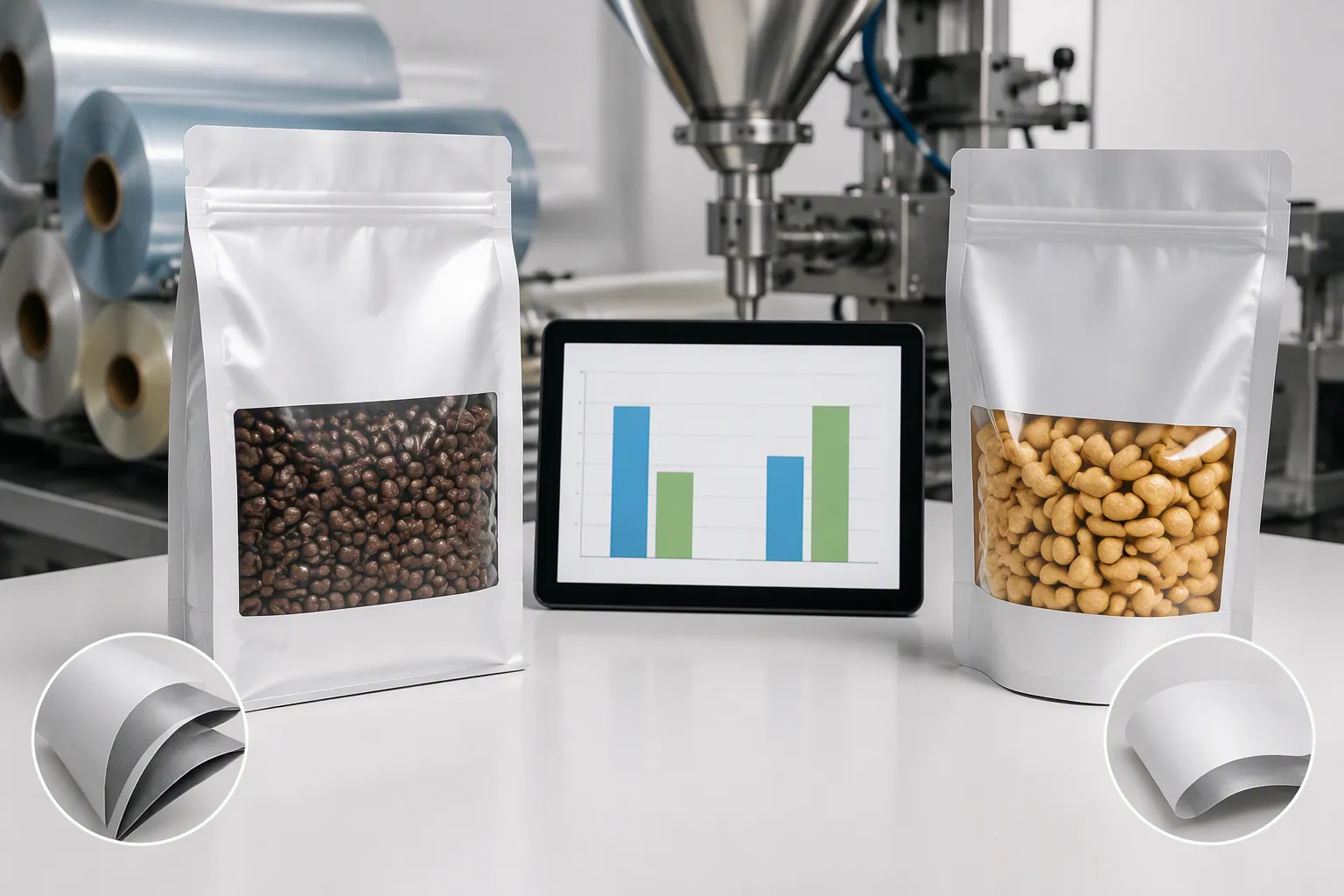
Flat bottom pouches cost more than basic stand-up pouches. Three layers of film and eight seals use more material and machine time. A flat-bottom pouch uses more material because it has extra sealing surfaces and needs structural reinforcement. This makes the cost per unit higher. Production also runs a little slower because forming and sealing need higher precision. As a result, conversion costs go up.
Stand-up pouches are often the cheaper, more material-efficient choice. They use less film and run faster on filling lines. The table below compares the main cost drivers.
Cost Driver | Flat Bottom Pouch | Stand-Up Pouch |
|---|---|---|
Material usage | More material for extra seals and reinforcement; higher cost per unit | More material-efficient; suited to price-sensitive markets |
Production speed | Slightly slower; needs precision in forming and sealing | Faster production speeds |
Conversion cost | Higher due to complex forming and sealing | Lower conversion cost |
Equipment fit | Works well with automated high-end filling systems | Runs on a wide range of filling equipment |
A flat bottom pouch still earns its higher price when the product needs a stable base and a premium look. The box pouch gives a consistent finished look that supports shelf presence.
Matching the Format to Your Product
Product weight and shape guide the choice. Flat bottom pouches suit coffee, pet food, snacks, ready meals, powders, and seafood. These goods benefit from a flat base, higher fill volume, and strong barrier films. A flat-bottom stand up pouch holds heavier portions without sagging. Powders and seafood gain from thick, durable materials and resealable options that keep freshness after opening. A flat bottom stand up pouch also stacks well in retail and logistics.
Stand-up pouches fit lighter, high-turnover goods. They adapt to a broader range of product shapes and sizes thanks to the expandable gusset. The stand up pouch works well for single-serve items and price-sensitive lines. The stand up pouches category covers many everyday products for this reason.
Buyers comparing flat bottom pouches, stand-up pouches should weigh volume against budget. A rectangular footprint and a completely flat base add cost, yet they pay off for premium goods. The bottom panel of a box pouch spreads weight evenly, and that stability protects the product through transit.
Meiji Packaging supports this decision with OEM/ODM services and a broad certification set. The company holds ISO 9001, BRCGS, FDA, EU, and TUV Austria approvals. Standard orders ship within 18–25 working days. These practical factors help brand owners select a format with confidence. The stand-up pouch remains the budget pick, and the flat bottom pouch serves heavier, premium lines. Each format carries its own footprint on the shelf and its own cost profile.
The flat bottom pouch wins on shape, stability, and printability. Its box-like base holds heavy fills, and five panels give brands room to tell a story. The stand-up pouch wins on simplicity and cost. It suits lighter goods and price-sensitive lines. A stand up pouch still stands after filling, yet it offers less branding space. Buyers who need a premium look and a firm footprint choose the box pouch. Those who need a lean, versatile format choose stand-up pouches. Resealable zippers and valves work well on both.
Each format fits different products and branding goals. A stand up pouches line serves high-turnover goods, and a stand-up pouch serves single-serve items. A flat bottom stand up pouch serves coffee, pet food, and ready meals. Both formats share one benefit: sustainable options. Compostable films, recycled films, and recyclable materials now cover either choice. That shared shelf presence makes the final decision easier.
FAQ
Which format holds heavier fills?
Flat bottom pouches carry more weight. Their flat base spreads the load across five panels. Meiji Packaging builds these bags with a co-extruded PE sealant layer. That layer prevents bottom seal failure for loads up to 10kg+. A stand-up pouch gathers force on one gusset seam, so it suits lighter goods.
Do both formats accept zippers and valves?
Both formats take resealable zippers and degassing valves. Coffee brands often add a one-way valve to release carbon dioxide. Pet food and powder lines use the same closures. A flat base keeps the bag steady when a shopper opens and recloses it. Meiji Packaging offers these features on request.
Which pouch offers more branding space?
Flat bottom pouches win on printable area. They provide five surfaces: front, back, two sides, and the bottom. Stand-up pouches typically offer three panels. Brands that need room for story panels, certifications, and multilingual copy gain more space with the box-style design.
How do the two formats compare on cost?
Flat bottom pouches cost more per unit. Three webs of film and eight seals take extra material and machine time. Stand up pouches use less film and run faster on filling lines. Price-sensitive lines often favor the simpler format, while premium goods absorb the higher cost.
Which format suits coffee and pet food?
Coffee, pet food, snacks, ready meals, powders, and seafood fit flat bottom pouches well. These products need a firm base, higher fill volume, and strong barrier films. Lighter, high-turnover goods fit stand up pouches. Buyers should test real product in both formats before committing.

