


Benefits and Limitations of Vacuum Packaging for Fish Products

Fish and seafood are highly perishable products that require effective packaging to maintain quality during storage, transportation, and distribution. Vacuum packaging for fish is widely used because removing air from the package can reduce oxygen exposure, help protect the product from environmental factors, and create a compact package suitable for refrigerated or frozen distribution.
However, vacuum packaging is not simply a matter of removing air from a bag. The choice of vacuum packaging bags for fish, material structure, thickness, puncture resistance, oxygen barrier, seal strength, and storage conditions can all affect packaging performance.
This guide explains the major benefits and limitations of vacuum packaging for fish products and shows how to select suitable vacuum bags for fish, fish fillets, frozen seafood, and other seafood applications.
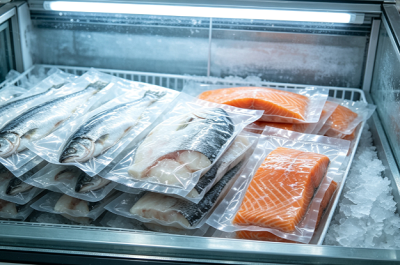
What Is Vacuum Packaging for Fish?
Vacuum packaging for fish is a packaging method in which air is removed from a pouch before the package is sealed. The resulting reduced-oxygen environment helps limit oxygen exposure around the product.
For seafood processors, distributors, retailers, and food manufacturers, fish vacuum packaging can provide several functional benefits, including product protection, compact packaging, improved presentation, and reduced exposure to oxygen and moisture.
The performance of a vacuum package depends heavily on the packaging material. A suitable seafood vacuum packaging bag needs to maintain its barrier properties and seal integrity throughout handling, storage, and transportation.
For this reason, choosing the right vacuum packaging bags for fish is just as important as the vacuum packaging process itself.
Benefits of Vacuum Packaging for Fish Products
1. Helps Reduce Oxygen Exposure
One of the primary benefits of vacuum packaging fish is reducing the amount of oxygen surrounding the product.
Oxygen exposure can contribute to oxidation and quality deterioration in many food products. A properly designed vacuum pouch can reduce the oxygen available inside the package and help protect the product during storage.
For applications where oxygen protection is particularly important, buyers may consider high barrier vacuum bags with structures designed for improved oxygen barrier performance.
Material selection should be based on the actual fish product, storage conditions, required shelf life, and applicable food packaging requirements.
2. Helps Maintain Fish Freshness
Properly selected vacuum bags for fish can help create a protected packaging environment by limiting exposure to oxygen, moisture exchange, and external contamination.
Vacuum packaging is commonly used for products such as:
Fish fillets
Salmon
Shrimp
Lobster tails
Frozen fish
Other seafood products
Meiji's chamber vacuum pouches are designed for seafood applications, including fish fillets, shrimp, and lobster tails. The pouches are available in different thicknesses and material structures to address different product requirements.
3. Helps Reduce Moisture Loss and Freezer Burn
Frozen fish can experience quality deterioration when exposed to air and moisture loss during storage.
Using appropriate vacuum bags for frozen fish can help create a close-fitting package around the product and reduce exposure to the surrounding environment.
For frozen seafood applications, packaging buyers should consider:
Low-temperature performance
Seal strength
Puncture resistance
Moisture barrier
Oxygen barrier
Package flexibility
Meiji offers dedicated frozen seafood vacuum packaging pouches in 3 mil, 4 mil, and 5 mil options for demanding frozen storage and logistics conditions.
4. Provides Protection During Storage and Transportation
Seafood products may experience considerable mechanical stress during processing, handling, warehousing, and transportation.
A suitable seafood vacuum packaging bag should therefore provide more than basic barrier performance. Mechanical strength is also important.
For fish products containing bones or sharp edges, a bag with stronger puncture resistance can help reduce the risk of package damage.
Meiji's chamber vacuum pouches use multilayer PA/PE co-extruded structures and are available in heavier thicknesses for applications requiring additional puncture resistance.
5. Creates a Compact Package
Vacuum packaging removes excess air from around the product, allowing the pouch to fit closely around fish or seafood.
This can help create a compact package that is convenient for:
Refrigerated distribution
Frozen storage
Carton packing
Retail display
Transportation
Warehouse handling
The final package size and appearance depend on the product shape, pouch dimensions, material structure, and vacuum process.
6. Can Improve Retail Product Presentation
For retail seafood products, packaging is not only about protection. Product visibility and branding can also influence purchasing decisions.
Clear vacuum pouches for seafood can allow buyers to see the fish product inside the package.
For branded retail products, custom printed vacuum pouches can add:
Brand identity
Product information
Preparation instructions
Regulatory information
Marketing graphics
Product differentiation
Meiji provides custom printed vacuum packaging pouches with multiple material structures, thickness options, and printing capabilities for food packaging applications.
Limitations of Vacuum Packaging for Fish Products
Although vacuum packaging offers important benefits, it also has limitations that seafood buyers should understand.
1. Vacuum Packaging Does Not Replace Cold-Chain Management
Vacuum packaging is a packaging technology, not a substitute for temperature control.
Reduced-oxygen packaging, including vacuum packaging, can create specific food safety considerations for fish and seafood. Therefore, vacuum packaging fish safety depends on more than the bag itself.
Appropriate processing, refrigeration or freezing, temperature monitoring, labeling, handling, and food safety controls may be required depending on the product and target market.
A vacuum bag supplier should provide packaging specifications, but seafood processors remain responsible for establishing appropriate food safety controls for their products and processes.
2. Fish Bones and Shells Can Damage the Bag
One of the most important practical limitations of vacuum packaging is the possibility of puncture.
Fish products may contain:
Bones
Sharp fins
Shells
Hard edges
Irregular surfaces
These can create stress points when the vacuum is applied or when packages are handled during transportation.
For these applications, puncture resistant vacuum bags can provide an additional level of packaging protection.
Meiji's chamber vacuum pouch range includes 3 mil, 4 mil, and 5 mil options. Heavier 5 mil pouches can be considered for bone-in or sharper products where additional puncture resistance is required.
3. Seal Integrity Is Critical
A vacuum package is only effective if the seal remains intact.
Poor sealing, contamination in the seal area, unsuitable material selection, or excessive mechanical stress can result in leakage and loss of vacuum.
Therefore, buyers evaluating vacuum packaging bag seal strength should consider:
Seal strength
Seal width
Material compatibility
Pouch thickness
Product contamination around the sealing area
Storage temperature
Transportation conditions
Meiji's chamber vacuum pouch specifications include a stated seal strength of more than 50 N/15 mm.
4. Material Structure Affects Barrier Performance
Not all vacuum bags provide the same oxygen and moisture barrier performance.
Depending on the application, packaging manufacturers may use different multilayer structures.
Meiji offers PA/PE as a standard structure and PA/EVOH/PE as a high-barrier option for applications requiring stronger oxygen barrier performance.
For products requiring higher barrier protection, buyers should evaluate:
Oxygen transmission rate
Water vapor transmission rate
Puncture resistance
Seal performance
Temperature resistance
Required storage conditions
This is why selecting high barrier vacuum bags should be based on the product and supply chain rather than simply choosing the thickest available pouch.
5. Vacuum Packaging Does Not Eliminate All Food Safety Risks
A common misconception is that removing oxygen makes fish automatically safe for long-term storage.
It does not.
Reduced-oxygen packaging requires appropriate food safety controls for fish and seafood products. Therefore, vacuum packaging should be integrated into an appropriate seafood processing and food safety system.
The packaging bag provides a physical and barrier function; it does not replace temperature control, sanitation, validated processing, or HACCP procedures.
What to Look for in Vacuum Packaging Bags for Fish
When selecting vacuum packaging bags for fish, buyers should evaluate more than price and appearance.
Oxygen Barrier
For products that are sensitive to oxygen exposure, an appropriate oxygen barrier can help maintain the intended packaging environment.
High-barrier structures such as PA/EVOH/PE may be considered when stronger oxygen protection is required.
Moisture Barrier
Moisture control is important for refrigerated and frozen seafood applications.
A suitable packaging structure should help protect the product from unwanted moisture transfer and support the intended storage conditions.
Puncture Resistance
For fish products with bones or seafood with shells, puncture resistant vacuum bags can reduce the risk of package damage.
A thicker pouch may be appropriate for demanding applications, but thickness should be selected together with material structure and product characteristics.
Seal Strength
Strong and consistent seals are essential for maintaining package integrity.
When comparing vacuum packaging bags, buyers should consider both the material and the sealing characteristics of the finished pouch.
Low-Temperature Performance
For frozen fish and seafood, the pouch needs to maintain flexibility and mechanical performance at low temperatures.
A bag that becomes excessively brittle during freezing or transportation may increase the risk of cracking or leakage.
Meiji offers low-temperature vacuum pouch options for frozen seafood applications.
Transparency and Printing
For retail seafood, transparency can allow consumers to see the product.
For branded products, printed vacuum packaging bags can combine product protection with brand communication.
Meiji's vacuum pouch solutions include high-clarity options and custom printing capabilities.
What Thickness Vacuum Bag Should You Use for Fish?
There is no single thickness that is suitable for every fish product.
The appropriate thickness depends on:
Fish type
Presence of bones
Product shape
Product weight
Storage temperature
Transportation conditions
Required puncture resistance
Packaging equipment
Required barrier performance
| Application | Vacuum Bag Consideration |
|---|---|
| Soft fish products | 3 mil vacuum pouches |
| Standard fish fillets | 3–4 mil vacuum pouches |
| General seafood applications | 4 mil vacuum bags |
| Fish with bones | 4–5 mil puncture-resistant pouches |
| Shellfish | Heavy-duty vacuum pouches |
| Frozen fish | Low-temperature vacuum pouches |
| Products requiring stronger oxygen protection | High-barrier vacuum pouches |
Meiji's chamber vacuum pouch range is available in 3 mil, 4 mil, and 5 mil options. Actual bag selection should be validated through product and packaging trials before large-scale purchasing.
Vacuum Packaging Bags for Different Fish and Seafood Products
Fish Fillets
Fish fillets generally benefit from flexible vacuum pouches that can conform closely to the product.
Key requirements include:
Good flexibility
Reliable sealing
Suitable oxygen barrier
Appropriate puncture resistance
Clear product visibility when required
Meiji chamber vacuum pouches are designed for applications including fish fillets and seafood.
Frozen Fish
For frozen products, frozen seafood vacuum packaging bags should maintain their mechanical performance at low temperatures.
Important characteristics include:
Low-temperature resistance
Strong seals
Puncture resistance
Barrier performance
Appropriate thickness
Fish with Bones
Bone-in fish products require greater attention to puncture resistance.
A heavier pouch structure can provide additional mechanical protection against sharp edges and bones.
Shrimp and Shellfish
Shrimp and shellfish may have irregular shapes and hard or sharp surfaces. Packaging should therefore combine flexibility with sufficient puncture resistance.
Meiji identifies shrimp and lobster tails among the seafood applications for its chamber vacuum pouch range.
Retail Seafood
Retail applications may place greater emphasis on product visibility and branding.
For these products, custom printed vacuum pouches can combine functional vacuum packaging with branded presentation.
High-Barrier Vacuum Packaging for Fish and Seafood
For seafood products where oxygen protection is an important packaging consideration, a high barrier vacuum pouch may be appropriate.
Meiji's high-barrier recyclable vacuum pouch solution is designed around multilayer barrier structures and recyclable packaging objectives. It provides an option for brands seeking both barrier performance and sustainability considerations.
This type of packaging can be considered for seafood brands looking for a combination of:
Oxygen barrier
Moisture protection
Vacuum sealing performance
Product protection
Recyclability
Custom packaging
The correct material structure should always be selected according to the actual product, storage conditions, applicable regulations, and required performance.
Recyclable Vacuum Packaging for Seafood
Sustainability is becoming an increasingly important consideration in food packaging.
For seafood brands looking to reduce packaging complexity or improve recyclability, recyclable vacuum packaging bags can provide an alternative to conventional multilayer structures.
Meiji offers high-barrier recyclable vacuum pouches designed for food packaging applications, providing an option for brands seeking both barrier performance and sustainability considerations.
When evaluating eco friendly vacuum pouches, buyers should look beyond marketing terminology and verify:
Material structure
Recyclability claims
Barrier performance
Seal performance
Food-contact suitability
Actual recycling infrastructure in the target market
Custom Printed Vacuum Packaging Bags for Fish
For seafood brands selling through supermarkets, retailers, distributors, or e-commerce channels, packaging is also a branding tool.
Custom printed vacuum packaging bags can be customized according to product and branding requirements.
Typical customization options include:
Bag size
Thickness
Material structure
Surface printing
Color
Finish
Seal configuration
Packaging format
Meiji provides custom printed vacuum packaging pouches with multiple material options and printing capabilities for food packaging applications.
For seafood brands, customized packaging can help create a consistent visual identity while maintaining the functional requirements of vacuum packaging.
Chamber Vacuum Pouches vs. Other Vacuum Bag Formats
The appropriate vacuum pouch format depends on the packaging process and application.
Meiji's product portfolio includes chamber vacuum pouches, custom printed vacuum pouches, recyclable high-barrier vacuum pouches, and embossed vacuum bags.
For buyers using chamber-style vacuum packaging, chamber vacuum pouches can provide a practical solution for fish, seafood, meat, cheese, and other food products.
For specific vacuum sealing applications, embossed vacuum bags may also be considered depending on the packaging equipment and required bag format.
The correct bag should be selected based on equipment compatibility, product characteristics, required barrier performance, bag dimensions, and sealing requirements.
How to Choose the Right Vacuum Packaging Bag for Fish
When purchasing vacuum packaging bags for fish, seafood processors and buyers should consider the following questions:
1. What Type of Fish Are You Packaging?
Fish fillets, bone-in fish, shrimp, lobster tails, and frozen seafood may require different levels of puncture resistance and flexibility.
2. Is the Product Fresh or Frozen?
Frozen products require packaging materials capable of maintaining appropriate mechanical performance at low temperatures.
3. Does the Product Have Sharp Bones or Shells?
If so, consider puncture resistant vacuum bags and potentially a heavier pouch thickness.
4. What Level of Oxygen Barrier Is Required?
For applications requiring stronger oxygen protection, consider high barrier vacuum bags or structures incorporating EVOH.
5. Does the Product Require Retail Printing?
For branded seafood products, custom printed vacuum pouches can combine product protection with visual branding.
6. Are Sustainability Requirements Important?
For brands with sustainability objectives, evaluate recyclable vacuum packaging bags and other suitable material structures.
7. What Storage and Transportation Conditions Will the Package Experience?
Consider refrigeration, freezing, transportation distance, handling conditions, and expected storage duration.
Meiji Vacuum Packaging Solutions for Fish and Seafood
Meiji Packaging provides a range of vacuum packaging solutions for food and seafood applications.
Chamber Vacuum Pouches
Meiji's Chamber Vacuum Pouch 3Mil, 4Mil and 5Mil range is designed for applications requiring flexibility, barrier performance, and puncture resistance.
The range includes PA/PE standard structures and PA/EVOH/PE high-barrier options, with applications including fish fillets, shrimp, lobster tails, frozen seafood, meat, and other food products.
Explore Meiji Chamber Vacuum Pouches
High-Barrier Recyclable Vacuum Pouches
For brands looking for a combination of barrier protection and sustainability considerations, Meiji offers high-barrier recyclable vacuum pouches.
These solutions are suitable for food packaging applications where oxygen barrier performance and recyclable material options are important.
Explore High-Barrier Recyclable Vacuum Pouches
Custom Printed Vacuum Packaging Pouches
Meiji also provides custom printed vacuum packaging pouches for brands that require customized dimensions, materials, printing, and packaging appearance.
This option is particularly suitable for retail seafood brands and food manufacturers looking to combine functional vacuum packaging with branded presentation.
Explore Custom Printed Vacuum Pouches
Embossed Vacuum Bags
For suitable vacuum sealing applications, Meiji also provides embossed vacuum bags as part of its vacuum packaging product range.
Vacuum Packaging for Fish: Quick Selection Guide
| Requirement | Recommended Solution |
|---|---|
| Fresh fish fillets | Flexible vacuum pouches with suitable barrier performance |
| Fish with bones | 4–5 mil puncture-resistant vacuum pouches |
| Frozen fish | Low-temperature vacuum packaging bags |
| Shrimp and shellfish | Puncture-resistant seafood vacuum pouches |
| Long storage requirements | High-barrier vacuum packaging |
| Retail seafood | Clear or custom printed vacuum pouches |
| Premium seafood | High-clarity high-barrier pouches |
| Sustainability-focused packaging | Recyclable high-barrier vacuum pouches |
| Branded seafood products | Custom printed vacuum packaging pouches |
| Specific vacuum sealing applications | Suitable embossed or chamber vacuum bags |
Frequently Asked Questions About Vacuum Packaging for Fish
Does Vacuum Packaging Extend the Shelf Life of Fish?
Vacuum packaging can help protect fish by reducing oxygen exposure and providing a physical barrier around the product. However, actual shelf life depends on the fish species, initial product quality, processing conditions, packaging material, storage temperature, and other food safety controls.
Vacuum packaging should therefore not be treated as a guarantee of a specific shelf life.
What Are the Best Vacuum Bags for Fish?
The best vacuum bags for fish depend on the product.
For standard fish fillets, flexible PA/PE vacuum pouches may be suitable. Fish with bones or sharp surfaces may require heavier puncture-resistant bags, while products requiring stronger oxygen protection may benefit from high-barrier structures.
What Thickness Vacuum Bag Should I Use for Fish?
There is no universal thickness.
Meiji offers 3 mil, 4 mil, and 5 mil chamber vacuum pouches. Thinner pouches may be suitable for softer products, while heavier 5 mil pouches can be considered for bone-in or sharper products. Product trials are recommended before large-scale purchasing.
Are Vacuum Packaging Bags Suitable for Frozen Fish?
Yes, vacuum packaging bags can be used for frozen fish when the selected material is appropriate for the required temperature and handling conditions.
For frozen seafood, buyers should evaluate low-temperature performance, puncture resistance, seal strength, and barrier properties.
Are Vacuum Bags for Seafood Recyclable?
Some vacuum packaging structures can be designed for recyclability, depending on the material structure and applicable recycling system.
Meiji offers recyclable high-barrier vacuum pouch solutions for brands looking for more sustainable packaging options.
Can Vacuum Packaging Bags Be Custom Printed?
Yes. Custom printed vacuum pouches can be produced with customized artwork, dimensions, materials, and printing specifications depending on the packaging requirements.
Meiji provides custom printed vacuum packaging pouch solutions for food and seafood applications.
Conclusion
Vacuum packaging for fish can provide important benefits, including reduced oxygen exposure, product protection, moisture control, compact packaging, and improved retail presentation.
However, the effectiveness of a vacuum package depends on choosing the right packaging material and pouch construction. Fish bones, shells, low-temperature storage, seal integrity, oxygen barrier requirements, and transportation conditions should all be considered when selecting vacuum packaging bags for fish.
For seafood processors and brands, the right solution may range from standard chamber vacuum pouches to puncture resistant vacuum bags, high barrier vacuum bags, recyclable vacuum packaging bags, or custom printed vacuum pouches.
Meiji Packaging provides customizable vacuum packaging solutions for fish and seafood applications, including different thicknesses, material structures, barrier options, printing capabilities, and pouch formats.
If you are sourcing vacuum bags for fish, seafood vacuum packaging bags, or custom vacuum packaging pouches, contact Meiji to discuss the appropriate material structure, thickness, size, and packaging requirements for your product.

