



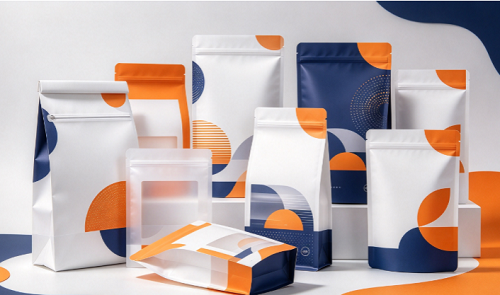
At Meiji Packaging, custom printed stand-up pouches are available with different printing options to suit different order volumes. The minimum order quantity for rotogravure printing is 10,000 pieces, while digital printing is available from 1,000 pieces for applicable products. The standard production lead time for custom printed stand-up pouches is typically 15–20 working days, depending on the specifications and order requirements.
This guide explains how to choose a printing method, plan your order quantity, estimate production time, and prepare the information needed to request a custom pouch quote.
1. What Is the MOQ for Custom Printed Pouches?
MOQ, or minimum order quantity, is the smallest number of units a supplier accepts for a particular order. In flexible packaging, MOQ can vary according to the pouch style, dimensions, material structure, printing method, and production requirements.
Understanding MOQ before requesting a quote helps buyers plan their budgets, manage inventory, and select a printing solution that fits their business needs.
Meiji Packaging's MOQ for Custom Printed Pouches
For Meiji Packaging's custom printed stand-up pouches, the MOQ depends on the selected printing method:
| Printing Method | MOQ | Typical Application |
|---|---|---|
| Digital Printing | 1,000 pieces | Smaller runs and multiple designs |
| Rotogravure Printing | 10,000 pieces | Larger production runs and recurring orders |
These quantities apply to the specified custom printed stand-up pouch offering. Other pouch styles or special constructions may have different requirements, so confirm the MOQ for your chosen product before placing an order.
How Should You Plan Your Order Quantity?
When deciding how many custom printed pouches to order, consider your expected sales volume, product shelf life, storage capacity, and replenishment schedule.
For new product launches: Estimate initial demand and compare eligible digital printing options with larger production runs.
For established products: Consider whether an order of 10,000 pieces or more fits your regular sales and restocking requirements.
For multiple SKUs: Confirm whether the MOQ applies separately to each design, size, material, or product variant.
For repeat orders: Review historical sales and forecast demand to reduce the risk of excess packaging inventory.
2. Which Printing Method Is Best for Custom Printed Pouches?
The right printing method depends on order quantity, artwork complexity, color consistency, production budget, and how frequently your packaging design changes. Meiji Packaging offers digital printing and rotogravure printing for applicable flexible packaging products.
Rotogravure Printing for Large-Volume Orders
Rotogravure printing is widely used for flexible packaging produced in larger quantities. It uses engraved printing cylinders to transfer ink onto the packaging material, supporting detailed graphics and consistent reproduction across production runs.
Consider rotogravure printing when you need:
Large quantities of custom printed packaging.
Consistent brand colors across repeat orders.
Detailed product graphics and multi-color designs.
A cost structure suited to recurring, high-volume production.
The main consideration is the initial cost and preparation associated with printing cylinders. For larger orders, these setup costs can be distributed across more units. Meiji Packaging lists a 10,000-piece MOQ for rotogravure-printed custom stand-up pouches.
Digital Printing for Flexible Packaging
Digital printing transfers artwork to the packaging material without the traditional engraved cylinders used in rotogravure printing. It can be suitable for smaller production runs, multiple designs, and projects that require greater flexibility when updating artwork.
Digital printing may be appropriate when you need:
Smaller quantities for market testing or product launches.
Several designs or product variations.
More flexibility when revising packaging artwork.
To avoid traditional printing plate or cylinder costs.
Meiji Packaging lists a 1,000-piece MOQ for digital-printed custom stand-up pouches. Actual availability, material compatibility, and specifications should be confirmed for each project.
Rotogravure vs. Digital Printing: How to Choose
| Factor | Rotogravure | Digital |
|---|---|---|
| Order quantity | Typically larger runs | Can suit smaller runs |
| Printing setup | Engraved cylinders required | No traditional engraved cylinders |
| Design flexibility | Well suited to repeat designs | Convenient for multiple designs |
| Meiji MOQ reference | 10,000 pieces | 1,000 pieces |
There is no single best printing method for every project. Compare the total order cost, including setup, materials, production, and freight, rather than evaluating unit price alone.
What Artwork Files Should You Prepare?
Before production, prepare your final packaging artwork and confirm the supplier's file requirements. These may include:
Final artwork in an accepted format, such as AI or print-ready PDF.
Confirmed pouch dimensions and artwork layout.
Bleed, safe areas, and sealing areas specified by the supplier.
Color references and font or image requirements.
Required product information, barcodes, and regulatory text.
Request a review of the artwork before mass production. Confirm colors, text, dimensions, and the placement of functional features such as zippers, tear notches, and transparent windows.
3. How Long Does It Take to Produce Custom Printed Pouches?
Production lead time is the period required to manufacture an order after the relevant specifications and production arrangements have been confirmed. For Meiji Packaging's custom printed stand-up pouches, the standard lead time is typically 15–20 working days. More complex pouch structures may require additional production time.
Typical Lead Time by Pouch Type
| Pouch Type | Published Production Lead Time |
|---|---|
| Custom Printed Stand-Up Pouches | 15–20 working days |
| Flat-Bottom Pouches (8-Side Seal) | 18–25 working days |
These figures are reference lead times, not guaranteed delivery dates. Confirm the production schedule for your selected pouch, printing method, order quantity, and specifications before placing the order.
What Affects Custom Pouch Lead Time?
Several factors can influence the production schedule:
Artwork approval: Design changes or delayed approvals can postpone production.
Material requirements: Specialized barrier structures, thicknesses, or sustainable materials may affect material preparation.
Printing method: Printing preparation and production arrangements vary by process.
Pouch construction: Complex seals, gussets, closures, and other features can require additional processing.
Order quantity: Production volume and the factory's current schedule can affect timing.
Quality inspection: Printed packaging needs to be checked against the agreed specifications before dispatch.
How Can You Avoid Production Delays?
Buyers can help keep an order on schedule by confirming the design, dimensions, material structure, and functional requirements early. Submit complete artwork, respond promptly to sample or proof approvals, and request written confirmation of the expected production completion date.
Remember that production lead time and shipping time are different. International freight, customs clearance, and delivery to your warehouse may add time after manufacturing is complete. Include these factors when planning a product launch or packaging replenishment.
4. What Affects the Cost of Custom Printed Pouches?
The price of custom printed pouches depends on more than the printing method. Packaging specifications, material selection, functional features, order quantity, and delivery requirements all influence the final quotation.
Material and Pouch Structure
Different products require different levels of protection. Depending on the application, flexible packaging may use structures such as PET/PE, PET/AL/PE, or other laminated and co-extruded films. The appropriate construction depends on the product's moisture and oxygen sensitivity, light exposure, sealing requirements, and intended shelf life.
Aluminium foil and metallized layers may be considered when stronger barrier protection is needed. Recyclable mono-material options may suit projects with specific recyclability goals, provided the material meets the product's performance requirements.
Discuss your product, filling process, storage conditions, and target shelf life with your packaging supplier before selecting a material.
Printing and Setup Costs
Rotogravure printing typically involves cylinder preparation, while digital printing avoids traditional engraved cylinders. However, the more economical choice depends on the quantity, number of designs, packaging specifications, and quoted production costs.
When comparing quotations, check whether printing setup, special finishes, samples, and other requested services are included.
Size, Features, and Order Quantity
Larger pouches may use more material, while features such as resealable zippers, tear notches, degassing valves, spouts, and specialty finishes can affect manufacturing costs. Order quantity also influences how setup costs are distributed across individual units.
To compare suppliers fairly, request quotations using the same pouch dimensions, material structure, printing specifications, order quantity, and delivery terms.
5. How to Choose the Right Custom Printed Pouch
Choosing the right pouch starts with the product being packaged. The pouch style, material, closure, and barrier performance should meet both product protection requirements and customer expectations.
Choose a Pouch Style for Your Product
Stand-Up Pouches: Suitable for many snacks, coffee, tea, powders, and pet food products. Their bottom gusset allows the pouch to stand upright for retail display. Explore stand-up pouches.
Flat-Bottom Pouches: Offer a stable base and multiple printable panels, making them useful for products that need a structured shelf presentation. Explore flat-bottom pouches.
Side-Gusset Bags: Provide additional capacity and can be suitable for coffee, food, and some bulk products. Explore packaging products.
Vacuum Pouches: Designed for applications where air removal and suitable barrier performance are important, including certain meat, seafood, and other food products. View available packaging options.
Select Materials and Functional Features
After choosing a pouch style, consider the product's barrier requirements, filling process, storage conditions, and expected use. Depending on the product and available construction, customization may include:
Moisture and oxygen barrier layers.
Resealable press-to-close or other compatible zipper options.
Tear notches for convenient opening.
Degassing valves for suitable coffee packaging applications.
Transparent windows or matte and gloss finishes, where available.
Recyclable or compostable material options when appropriate for the application.
Always confirm material compatibility, food-contact requirements, and the availability of each feature with the supplier before finalizing your packaging design.
6. What Information Should You Prepare Before Requesting a Quote?
Providing complete specifications helps a packaging supplier recommend a suitable pouch structure and prepare a more accurate quotation. Before contacting Meiji Packaging, prepare the following information where available:
Product type: Explain what the pouch will contain, such as coffee, snacks, powders, or pet food.
Pouch style and dimensions: Specify the preferred format, width, height, and gusset dimensions.
Material requirements: Describe any barrier, thickness, sealing, or sustainability requirements.
Printing artwork: Share your logo, design files, color references, and number of artwork variations.
Order quantity: State the required quantity and the number of SKUs. For rotogravure-printed custom stand-up pouches, plan around the 10,000-piece MOQ.
Functional features: Identify any zipper, valve, tear notch, spout, or special finish requirements.
Delivery details: Provide your destination country and target delivery date.
With these details, the supplier can assess the appropriate printing method, material construction, MOQ, pricing, and production schedule for your project.
7. Frequently Asked Questions
What Is the MOQ for Custom Printed Pouches at Meiji Packaging?
For custom printed stand-up pouches, Meiji Packaging lists a minimum order quantity of 10,000 pieces for rotogravure printing and 1,000 pieces for digital printing. MOQ may vary for other pouch styles and specifications.
Can I Order Fewer Than 10,000 Custom Printed Pouches?
Yes, digital printing is available from 1,000 pieces for applicable custom printed stand-up pouches. Confirm the eligible pouch style, dimensions, materials, and design requirements before ordering.
Which Printing Method Is Better for Custom Pouches?
Rotogravure printing is often suitable for larger production runs and repeat orders, while digital printing can offer more flexibility for smaller quantities and multiple designs. The best choice depends on the total order cost, artwork, material, and quantity.
How Long Does Custom Pouch Production Take?
The standard production lead time for Meiji Packaging's custom printed stand-up pouches is typically 15–20 working days. Flat-bottom pouches with an eight-side seal may require 18–25 working days. Confirm the schedule for your specific order, and allow additional time for shipping.
What Affects the Price of Custom Printed Pouches?
Key factors include pouch dimensions, material structure, printing method, order quantity, special features, finishing requirements, and delivery terms. Providing complete specifications helps suppliers prepare a more useful quotation.
What Files Are Needed for Custom Pouch Printing?
Suppliers generally need final artwork in an accepted print-ready format, together with confirmed dimensions, colors, and layout details. Ask your supplier to review the file and specify any required bleed, safe areas, or font settings before production.
Get a Quote for Custom Printed Pouches
Choosing custom printed pouches involves balancing order quantity, printing quality, material performance, and production timing. For Meiji Packaging's custom printed stand-up pouches, the 10,000-piece rotogravure MOQ is a useful reference for brands planning larger production runs, while eligible digital printing options can support smaller orders starting at 1,000 pieces.
Before placing an order, confirm your pouch style, dimensions, material structure, printing method, quantity, and required delivery date. These details help determine the right packaging solution and establish a realistic production schedule.
Contact Meiji Packaging with your product specifications and artwork to discuss customization options, request a quotation, and confirm the MOQ and lead time for your project.

